
Practice Assignments Members Actually Finish: 4 Tested Design Rules to Increase Course Completion Rates

Most course creators spend weeks polishing video lectures and slide decks, only to watch student engagement crater the moment the first homework prompt appears. Learners binge video modules with enthusiasm, stall completely when confronted with an open-ended assignment, and quietly disappear from your community.
The issue is rarely a lack of student motivation; it is broken instructional design. Adult learners balance demanding careers with personal commitments, leaving zero patience for academic busywork, theoretical case studies, or ambiguous prompts that trigger cognitive fatigue. When practice exercises induce paralysis instead of quick execution, attrition is inevitable. By shifting from academic testing to high-usability assignment architecture, educators can dramatically increase submission rates and sustain active cohort engagement. Below are four battle-tested design rules from veteran course creators to transform intimidating homework into frictionless practice assignments your members will actually complete.
Why Traditional Course Practice Assignments Fail (and How to Fix Them)
Traditional course assignments fail because they treat adult learners like passive schoolchildren, overloading working memory with ambiguous prompts, theoretical case studies, and artificial friction. To fix them, creators must replace open-ended academic tasks with constrained, real-world micro-actions that deliver immediate, tangible utility.

The Blank Canvas Trap: Why Ambiguity Triggers Learner Paralysis
The most common mistake course creators make is assigning exercises that begin with a blank page. Prompts like "Write a comprehensive marketing strategy for your product" or "Draft a 10-page business proposal" seem thorough, but they impose massive extraneous cognitive load.
When an assignment lacks clear boundaries, the human brain must expend tremendous mental energy simply deciding how to begin, how to format the submission, and what "good" looks like. According to user experience research from the Nielsen Norman Group on minimizing cognitive load, split attention and excessive mental effort directly cause task abandonment. For an adult learner fitting coursework into a lunch break, facing an empty document triggers acute decision fatigue and imposter syndrome. Unclear parameters paralyze learners not because the subject matter is too difficult, but because the path to initiation is completely unpaved.
Gamification vs. Usability: Why Points and Badges Don't Fix Flawed Homework
Faced with declining completion numbers, course platforms frequently advise instructors to bolt on gamification layers: experience points, digital badges, confetti animations, and leaderboard rankings. While these extrinsic hooks produce temporary dopamine spikes during passive video consumption, they collapse entirely when a student encounters a poorly designed assignment.
Extrinsic rewards cannot compensate for severe behavioral friction. Under the Fogg Behavior Model, developed by Stanford behavior scientist Dr. BJ Fogg, a behavior ($B$) occurs only when Motivation ($M$), Ability ($A$), and a Prompt ($P$) converge simultaneously ($B = MAP$). When an assignment is overly complex, confusing, or time-consuming, the learner's "Ability" plummets to near zero. No amount of arbitrary leaderboard points can overcome the sheer wall of friction created by an unstructured, overwhelming task. Fixing completion rates requires increasing learner Ability by streamlining the task itself, rather than attempting to artificially inflate Motivation with superficial gamification.
Moving from Academic Testing to Actionable Assignment Design
Traditional education conditions creators to design assignments as evaluative examinations designed to grade student competence. In professional and cohort-based learning, this pedagogical model is fundamentally counterproductive.
Adults learn under fundamentally different psychological conditions than children. Educational researcher Malcolm Knowles codified this reality in his foundational framework of andragogy and adult learning theory, demonstrating that adults are intrinsically problem-centered, self-directed, and motivated by immediate operational application. They do not enroll in courses to earn an "A"; they enroll to achieve a tangible capability, automate a painful task, or produce a commercial asset. Actionable assignment design abandons academic surveillance in favor of operational enablement, transforming homework from an anxiety-inducing test into a guided, high-leverage production sprint.
Rule 1: Run a Friction Audit and Apply the 15-Minute Rule
The 15-minute rule dictates that every foundational practice assignment should take no longer than a single 15-minute sitting to produce a tangible, reviewable output. By eliminating environmental and conceptual hurdles through a friction audit, you protect student momentum and prevent early cohort drop-off.

Scoping Prompts for Rapid "Micro-Wins" to Preserve Learner Momentum
Momentum is the single most valuable currency in online education. When a student completes an exercise quickly, the psychological sense of forward movement reinforces their belief in the course curriculum and their own self-efficacy.
This psychological dynamic is validated by landmark research published in the Harvard Business Review on the progress principle and small wins by Teresa Amabile and Steven Kramer. Their analysis revealed that of all the events that boost motivation and engagement, the single most powerful factor is making consistent, incremental progress in meaningful work. Designing assignments as tight, 15-minute micro-wins guarantees that students experience daily progress. Instead of deferring gratification until the end of a multi-hour project, learners receive an immediate psychological dividend that propels them directly into the subsequent module.
Case Teardown: Converting an Open-Ended Project into Three 15-Minute Sprints
Consider a common scenario in an executive sales training course. The original, flawed assignment instructed participants:
"Build a complete outbound cold email sequence for your target enterprise client, including personas, value propositions, subject lines, and 4 follow-up steps."
Unsurprisingly, a large majority of students stalled or abandoned the course at this exact junction. The prompt required market research, psychological positioning, copywriting, and technical cadence sequencing all at once.
| Iteration Phase | Assignment Prompt | Required Time | Focus & Deliverable |
|---|---|---|---|
| Original Baseline | Build a full 5-part outbound email cadence from scratch | 3–4 Hours | High friction; creates cognitive overload with a blank-slate prompt |
| Sprint 1 (Hook) | Write 3 subject lines using our 5-word curiosity framework | 10 Minutes | Low-friction entry point; rapid generation of hooks |
| Sprint 2 (Body) | Fill in a 3-sentence problem/solution pitch template | 15 Minutes | Structured core messaging; eliminates structural drafting friction |
| Sprint 3 (Call-to-Action) | Select one low-friction closing offer and submit the completed email | 15 Minutes | Clear finishing milestone; results in a complete, deployable asset |
By deconstructing the massive milestone into modular, 15-minute sprints, the instructor removed the cognitive intimidation factor. Each sprint delivered an independent asset while cumulatively constructing the comprehensive sequence.
The Minimum Viable Submission: Lowering the Emotional Barrier to Entry
Perfectionism is a primary driver of non-completion. When students feel their submission must be a fully realized masterpiece, they postpone the work until they have an uninterrupted afternoon—a window that rarely opens.
Counteract this avoidance by establishing the concept of the Minimum Viable Submission (MVS). Explicitly define the absolute minimum threshold required to pass the checkpoint:
- A rough bulleted list rather than formatted paragraphs
- A 90-second raw voice memo or Loom screen share explaining a concept
- A marked-up screenshot of an existing landing page identifying two conversion leaks
Lowering the emotional barrier to entry gives students permission to submit unpolished, authentic drafts. Once the initial submission is recorded, the psychological seal is broken, and learners willingly refine their work in subsequent iterations.
Rule 2: Build Scaffolded "Fill-in-the-Blank" Assets
Scaffolded assets replace intimidating blank documents with pre-formatted templates, swipe files, and partially completed models that handle 80% of the structural setup. This structure focuses the student's limited cognitive energy exclusively on applying the core conceptual transformation.

Replacing Blank Documents with Constrained Templates and Swipe Files
Expecting students to invent structural frameworks from scratch wastes precious working memory on logistical formatting rather than conceptual comprehension. If you are teaching financial analysis, do not instruct students to build a spreadsheet; provide the spreadsheet with pre-populated formulas, conditional formatting, and annotated cell notes.
Educational literature on instructional scaffolding strategies demonstrates that breaking complex tasks into structured, supported chunks is essential for skill acquisition. When instructors provide curated swipe files, architectural wireframes, and plug-and-play templates, students operate within safe parameters. Constraints do not limit creativity—they eliminate ambiguity, allowing learners to focus entirely on higher-order synthesis.
The 80/20 Starter Asset: Doing the Structural Setup for Your Students
The 80/20 Starter Asset rule dictates that course creators should perform the non-essential 80% of logistical setup work, leaving the high-impact 20% for the student to execute.
For instance, if your module teaches API integration in Python:
- Flawed approach: Tell students to configure a local development environment, install libraries, set up virtual environments, register API keys, and write a script from scratch. (Most students drop out during environment configuration).
- The 80/20 approach: Provide a pre-configured cloud sandbox link (such as a GitHub Codespace or Replit container) with dependencies already installed and API credentials securely mocked. Instruct students to write only the specific 8-line routing function demonstrated in the video.
By eliminating peripheral setup friction, you ensure the student spends 100% of their practice time mastering the primary learning objective.
Modular Worksheets: Guiding Students from Guided Prompts to Independent Execution
Effective scaffolding follows the classical instructional transition: "I do, we do, you do." Modular worksheets structure this progression directly onto the page through three distinct zones:
┌──────────────────────────────────────────────────────────┐
│  ZONE 1: WORKED EXAMPLE (Annotated Instructor Model)    │
│  Full demonstration showing inputs, reasoning, & output  │
├──────────────────────────────────────────────────────────┤
│  ZONE 2: GUIDED FRAMEWORK (Sentence Stems & Formulas)    │
│  "My product helps [Audience] who struggle with [Pain]   │
│   by providing [Mechanism], resulting in [Outcome]."     │
├──────────────────────────────────────────────────────────┤
│  ZONE 3: INDEPENDENT VARIATION (Custom Implementation)   │
│  Student adapts the proven structure to their own niche  │
└──────────────────────────────────────────────────────────┘
Providing an explicit worked model alongside guided fill-in-the-blank stems eliminates guesswork. Students first observe the gold standard, complete the guided middle layer, and finally transition to independent execution with complete confidence.
Rule 3: Anchor Every Exercise to Immediate Practical Utility
Every course exercise must produce an asset, decision, or workflow that students can immediately deploy in their actual business, job, or life that very day. Eliminating synthetic academic case studies guarantees that homework feels like accelerated progress rather than extra labor.

Solving Active, Real-World Problems Instead of Hypothetical Case Studies
Hypothetical case studies—such as analyzing the turnaround of Acme Widget Corp in 1998—feel disconnected from the learner's immediate reality. While academic institutions favor standardized case studies for uniform grading, adult learners view them as irrelevant theory.
Modern pedagogy highlights that active learning and authentic engagement dramatically outperform passive instruction and detached hypotheticals. Instead of analyzing an abstract scenario, students should execute the assignment on their own live projects: their actual client pipeline, their actual codebase, or their actual team workflow. When students realize that completing the module's homework simultaneously solves an urgent problem on their real-world to-do list, course completion becomes synonymous with professional productivity.
The "Ship-Ready Asset" Standard: Designing Work Students Can Immediately Deploy
To ensure an exercise holds authentic value, evaluate it against the Ship-Ready Asset Standard: Can the student take their completed assignment and immediately publish, send, or deploy it into the real world within 5 minutes of finishing?
Examples of ship-ready practice deliverables include:
- In a copywriting course: A published LinkedIn post that attracts live audience feedback, rather than a theoretical copy analysis.
- In a productivity course: A configured automation recipe inside Zapier or Make that actively routes inbound leads, rather than an essay on time management.
- In a leadership course: A completed agenda for an upcoming 1-on-1 meeting with an underperforming team member, ready to be put on the calendar.
When practice produces an asset that yields measurable real-world outcomes, the perceived value of your curriculum skyrockets, driving enthusiastic retention and word-of-mouth referrals.
Aligning Weekly Deliverables with the Core Transformation of Your Curriculum
Every assignment in your syllabus must represent a clear building block toward the macro-transformation promised on your sales page. If an exercise does not directly assemble the final capstone deliverable, delete it.
Educational theorists Grant Wiggins and Jay McTighe formalized this principle as Understanding by Design and Backward Design. In backward design, educators begin by identifying the desired end results, determining acceptable evidence of competency, and only then planning learning experiences and practice exercises.
flowchart LR
    A["Week 1 Deliverable<br/>Target Customer Avatar"] --> B["Week 2 Deliverable<br/>High-Converting Offer Hook"]
    B --> C["Week 3 Deliverable<br/>Landing Page Wireframe"]
    C --> D["Week 4 Deliverable<br/>Live Sales Funnel Launch"]
When learners recognize that each weekly assignment directly constructs a core component of their ultimate revenue-generating funnel, motivation remains resilient throughout the entire program.
Rule 4: Engineer Social Loops and Asynchronous Peer Accountability
Asynchronous peer accountability works by establishing public showcase channels governed by strict, structured feedback rubrics rather than casual commentary. This creates a psychological commitment device and self-sustaining community momentum without demanding 24/7 instructor intervention.
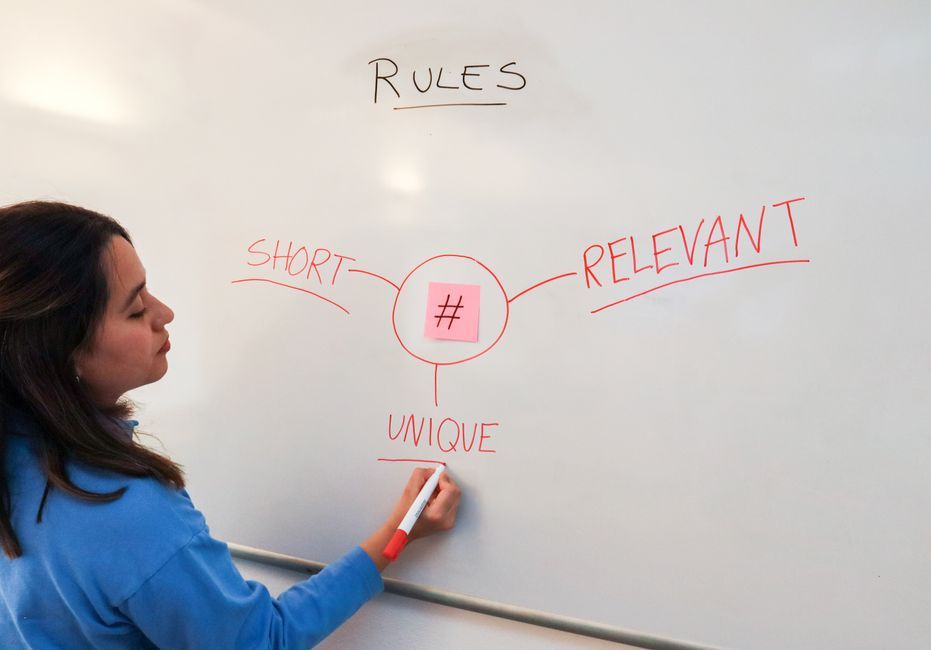
Creating Public Showcase Channels That Normalize Imperfect Drafts
Submitting work into a black box—such as an automated learning management portal where only the instructor views the file—isolates the student. In contrast, posting work in a communal showcase channel activates powerful social accountability.
Establish dedicated, topic-specific showcase spaces inside your community platform (Slack, Discord, Circle, or Skool) designated specifically as "WIP (Work In Progress) Showcases". Frame this space explicitly around unvarnished iteration. When incoming members see peers posting raw bullet points, unstyled designs, and flawed first attempts, the toxic pressure of performance perfection evaporates. Public visibility turns assignment submission into a communal rite of passage.
Replacing Vague "Looks Great!" Replies with Structured Peer-Critique Prompts
Left to their own devices, student community feedback tends to devolve into polite but useless platitudes like "Great job!" or "Looks awesome!" This shallow engagement fails to help the author and offers no learning value to the commenter.
Higher education research on peer assessment design from Cornell University shows that peer review only drives meaningful cognitive gains when learners are equipped with clear, explicit evaluation criteria. Similarly, adopting structured thinking frameworks—such as the pedagogical models documented by Harvard Project Zero thinking routines—empowers students to give actionable, objective critique.
Require every peer review to follow a mandatory 3-point critique protocol:
1. PRAISE (Specific):
   "The strongest element of your hook is [X] because it immediately addresses [Y]."

2. PRESSURE-TEST (Constructive Friction):
   "Where I felt confused or disconnected was at step [X], because..."

3. PUSH (Actionable Suggestion):
   "If you adjust sentence [X] to focus on [Outcome], the offer becomes much sharper."
Standardizing the peer-review format removes social awkwardness, teaches students how to critically evaluate work using course principles, and provides every member with high-caliber, actionable feedback.
Sustainable Community Feedback Loops That Scale Without Creator Burnout
Instructors often hesitate to introduce robust practice assignments because they fear drowning in grading queues. Attempting to personally evaluate hundreds of student submissions is a guaranteed path to creator exhaustion.
To build a sustainable model, implement the "Give One, Get One" rule: To unlock instructor eyes or post your own work in the priority critique queue, you must first complete a structured 3-point review on two peers' submissions. This mechanism distributes the feedback load across the entire cohort. The community becomes self-policing and mutually supportive, scaling cleanly whether you have 20 students or 2,000 members.
The Course Creator's Assignment Redesign Checklist
A reliable assignment redesign system requires auditing exercises against five concrete usability criteria, piloting changes across an isolated cohort slice, and tracking behavioral metrics like submission velocity and drop-off rates. Implementing this iterative loop transforms stagnant completion statistics into compounding member retention.
The 5-Point Friction Audit to Run Before Publishing Your Next Module
Before publishing or updating an exercise, stress-test it against usability principles derived from Jakob Nielsen's 10 Usability Heuristics, specifically prioritizing error prevention, recognition over recall, and clear system status:
- 1. The 15-Minute Clock Test: Can an average student complete the initial draft in 15 minutes or less without pausing to research external tools?
- 2. The Zero-Setup Standard: Does the assignment provide all spreadsheets, code repositories, canvases, and templates pre-formatted and ready to use?
- 3. The Single-Objective Focus: Does the assignment evaluate exactly one core skill, or is it secretly asking for three simultaneous competencies?
- 4. The Real-World Anchor: Does the deliverable produce an asset the learner can immediately deploy in their live business or job this week?
- 5. The Explicit Definition of Done: Is there an unambiguous, objective completion condition (e.g., "Paste your 3 bullet points into the #module-2 channel"), leaving no confusion about what constitutes submission?
A/B Testing Assignment Variations on a Cohort Slice to Increase Completion Rates
Never roll out a radical curriculum redesign across your entire active student base all at once. Instead, isolate a representative segment—such as an upcoming cohort sub-group or a traffic split in your evergreen funnel.
Test one variable at a time:
- Variant A (Control): Open-ended prompt with blank document instructions.
- Variant B (Treatment): Scaffolded template with the 15-minute rule and structured peer critique stems.
Monitor completion deltas over a standard tracking window. Creators who transition from Variant A to Variant B consistently observe substantial increases in assignment submissions, alongside marked reductions in refund requests and customer support inquiries.
Success Metrics to Track: Submission Speed, Drop-Off Churn, and Member Retention
To maintain assignment health over time, monitor three primary operational metrics:
- Submission Velocity: Measure the median elapsed time between a student marking a video lesson complete and posting their corresponding assignment. A healthy velocity is under 24 hours. A delay extending past 72 hours signals that the prompt contains hidden cognitive friction.
- Assignment Churn Rate: Identify the exact module where submission rates experience their steepest drop-off. If an early module achieves strong completion but a subsequent module sees a sharp decline, that exercise is suffering from the Blank Canvas Trap and requires immediate scaffolding.
- Cohort 90-Day Retention Correlation: Correlate assignment submission with long-term member retention. In subscription memberships and cohort-based programs, students who submit their foundational practice exercises within week one show significantly higher lifetime value (LTV) and renewal rates than those who only consume video lectures.
Transforming Passive Viewers into Active Finishers
Online education is experiencing a permanent shift away from bloated, passive content libraries toward results-oriented, actionable learning environments. Course creators who continue to assign open-ended, academic homework will watch completion rates hover near industry lows.
By running friction audits, enforcing the 15-minute rule, building scaffolded fill-in-the-blank assets, anchoring exercises to immediate utility, and automating peer feedback loops, you transform homework from an intimidating hurdle into a catalyst for student transformation. Audit your upcoming module today: dismantle the blank page, provide the starter template, and watch your members become confident, active finishers.
Author
BimEx Team
BIM Services Engineering Team
The BimEx engineering team builds Autodesk Platform Services viewers, BIM digital twins, IoT on BIM, custom IFC viewers, and scan-to-BIM indoor models for AEC and facilities teams.